
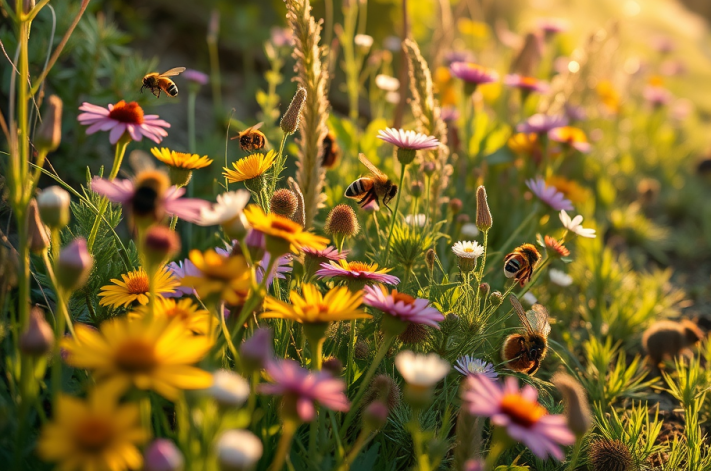
With support from Winchester City Council, Teg Down Nature Group has identified several potential verges that we hope to use as rewilding test sites. We hope to see how nature can bounce back over a 24-month period.
Allowing our verges to return to a natural state is one way to make a meaningful difference to pollinators such as bumblebees and butterflies. It helps halt the decline in insect numbers, supports our wild bird populations and provides food for hedgehogs, voles, shrews and other small mammals.
This can all be done in a way that is practical, tidy and people friendly.
Wild Verge Survey: What We Found
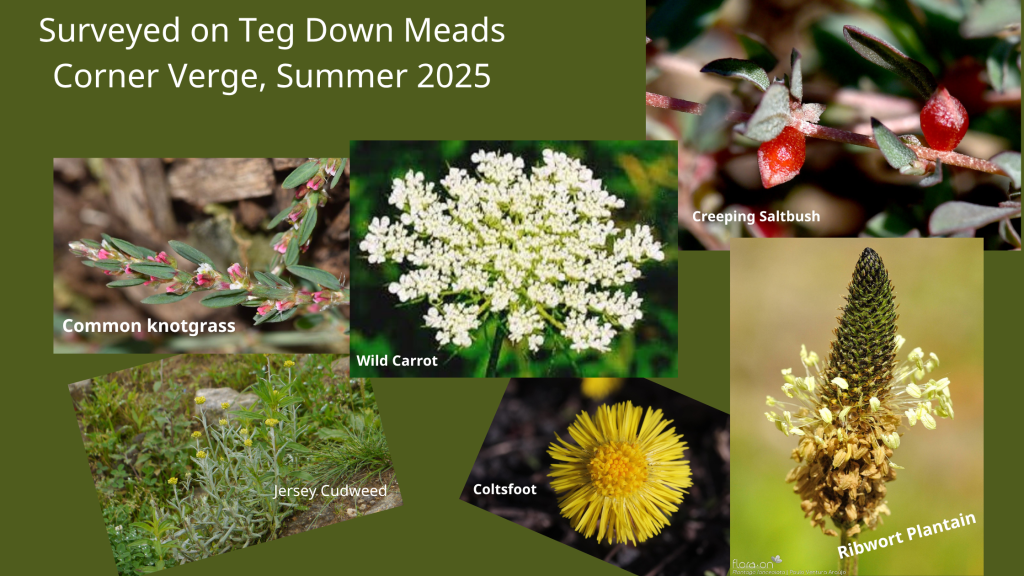
A survey at the end of the growing season following the first year of management by Teg Down Nature Group turned up a surprising variety of wild plants on this little plot on the corner of Teg Down Meads; over 40 different species were identified! Some of the most common were Ribwort Plantain, Common Knotgrass, and Dandelions, all of which are great for pollinators and hardy enough to thrive in tough roadside conditions.
We also spotted some more unusual plants like Jersey Cudweed, Wild Carrot, and Coltsfoot, exciting finds that suggest the verge is supporting a wide range of wildlife. Creeping Saltbush and Saltbush were also interesting, these salt-tolerant plants often grow in places affected by road grit or runoff.
Letting these areas grow wild boosts biodiversity, helps bees and butterflies, and creates little pockets of nature right on our doorsteps.
 Teg Down Nature Group